
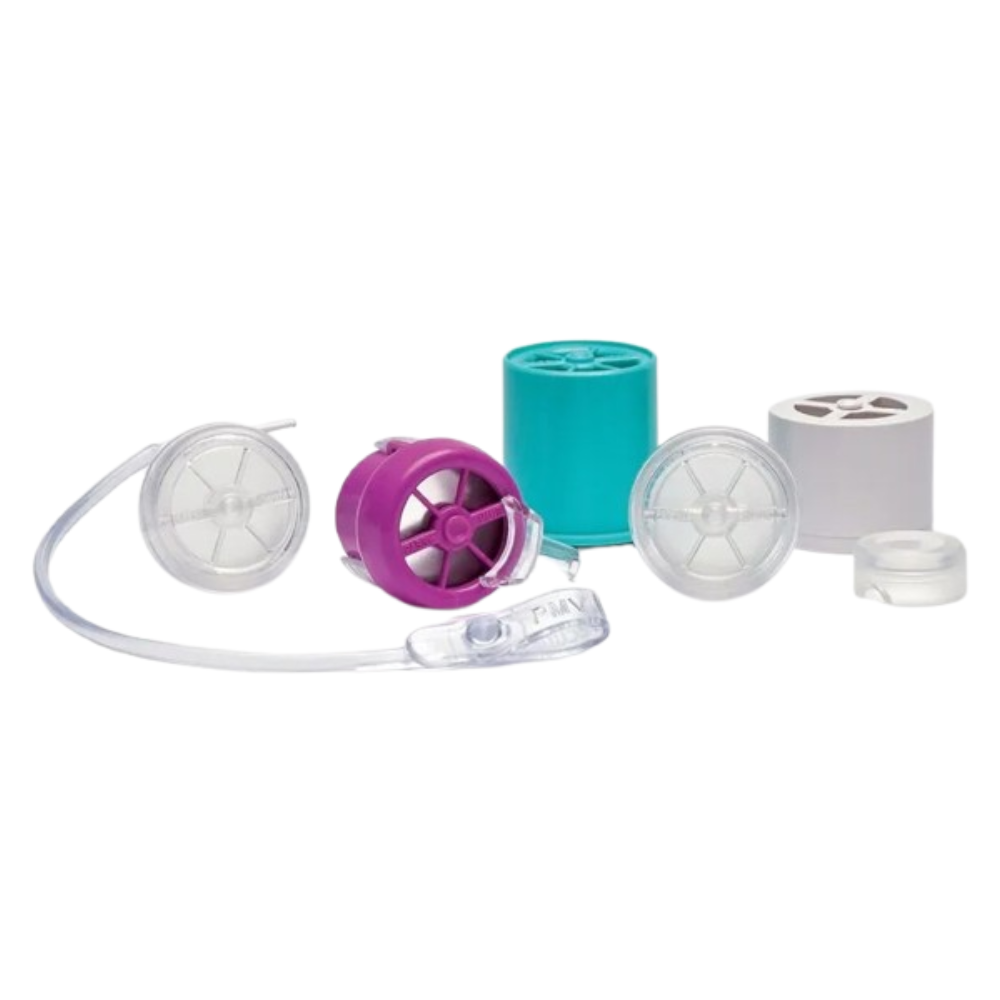
The Speaking Valve for Tracheostomy is a life-changing accessory for patients who wish to regain their voice. Beyond communication, it plays a critical clinical role in “closing” the respiratory system, which helps in secretion management and lung recruitment. Whether for home use or a tracheostomy speaking valve ventilator setup, these valves are essential for respiratory rehabilitation.
Key Features & Benefits:
- Instant Phonation: Restores the ability to speak clearly without the need for finger occlusion, reducing infection risks.
- Improved Swallowing: By restoring subglottic pressure, the valve helps prevent aspiration and makes swallowing safer.
- Secretion Management: Redirecting air through the upper airway allows for a more productive cough, making it easier to clear mucus.
- Types of Speaking Valves: We stock both “Closed-Position” (like Passy Muir) which stay closed until inhalation, and “Open-Position” valves (like Shiley or Portex) that close only upon exhalation.
- High Compatibility: Our valves are universal and fit all standard tracheostomy tubes (Size 6, 7, 7.5, 8).
- Clinical Performance: Used as a bridge toward decannulation (tube removal), it serves as a “stress test” for the upper airway.
Why Buy Original?
Safety is paramount. Understanding the tracheostomy speaking valve price is important, but quality ensures the valve won’t “stick.” We offer genuine Passy Muir and Portex speaking valves that are clinically tested for low resistance breathing.
Safety Checklist: How to Use
⚠️ WARNING: NEVER use a speaking valve with a tracheostomy cuff INFLATED. This can cause immediate suffocation.
- Deflate the Cuff: Always ensure the cuff is fully deflated before placing the valve.
- Clean the Tube: Suction the patient thoroughly to clear any secretions before attachment.
- Attach Gently: Twist the valve onto the 15mm hub of the inner cannula.
- Monitor Breathing: Watch for signs of respiratory distress. If the patient struggles, remove the valve immediately.
- Start Small: Beginners should start with 5–10 minutes and gradually increase the time.
Types of Speaking Valves Comparison
| Feature | Passy Muir (Closed Position) | Shiley/Portex (Open Position) |
| Default State | Closed (No leak) | Open (One-way) |
| Voice Quality | Stronger/Clearer | Moderate |
| Secretion Control | Excellent | Good |
| Ventilator Use | Yes (Specific Models) | Mostly Spontaneous Breathing |
Frequently Asked Questions (FAQs)
What is the tracheostomy speaking valve price in Pakistan?
The price for an original Passy Muir Valve typically ranges from Rs. 25,000 to Rs. 35,000, while standard Portex or Shiley valves range between Rs. 12,000 and Rs. 18,000. Contact us for today’s discounted rates.
How does a tracheostomy speaking valve work?
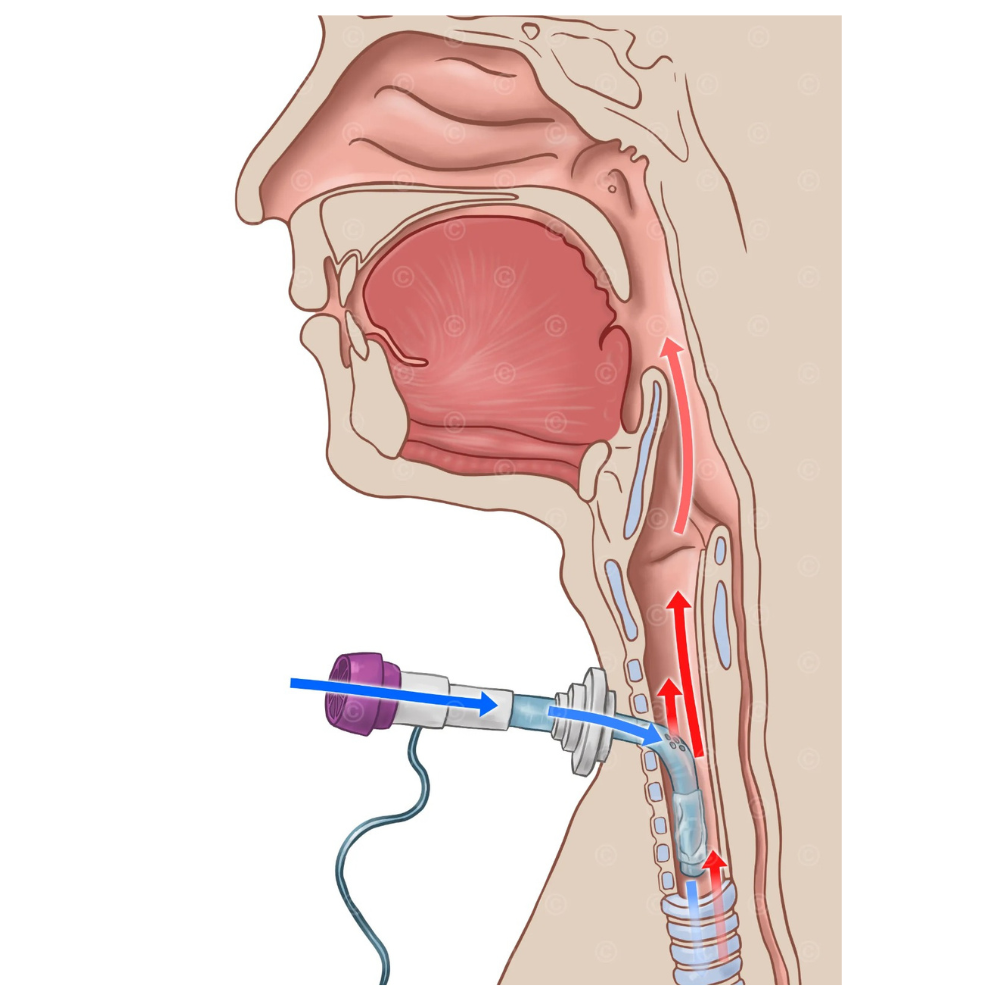
It is a “One-Way” valve. When you breathe in, the valve opens to let air into the lungs via the trach tube. When you breathe out, the valve snaps shut, forcing the air upward past the vocal cords and out through the mouth and nose, allowing you to speak.
Are there any speaking valve for tracheostomy side effects?
If used correctly, there are no major side effects. However, if the patient has an upper airway obstruction (like swelling), they may feel “air trapping” or difficulty exhaling. Always consult an ENT or Speech Therapist first.
Is a speaking valve permanent?
No, it is a removable accessory. It is usually worn during the day while awake and removed at night or during sleep to ensure maximum safety and ease of breathing.
Reviews
There are no reviews yet.