
When severe respiratory illness, post-ICU recovery, or chronic sleep disorders strike, maintaining stable oxygen levels and airway pressure becomes a daily priority. Transferring a fragile patient to a hospital every time they experience breathing difficulty is not only stressful but also poses severe infection risks.
Equipping your residence with modern breathing machines for lungs at home provides round-the-clock medical security. At Respiratory Sleep & Solutions, we help families across Lahore, Faisalabad, Multan, and major urban centers select, configure, and operate hospital-grade respiratory devices tailored to specific pulmonary prescriptions.
Understanding the fundamental differences between CPAP, BiPAP, and Oxygen Concentrators is crucial to securing the right life-support setup for your loved one.
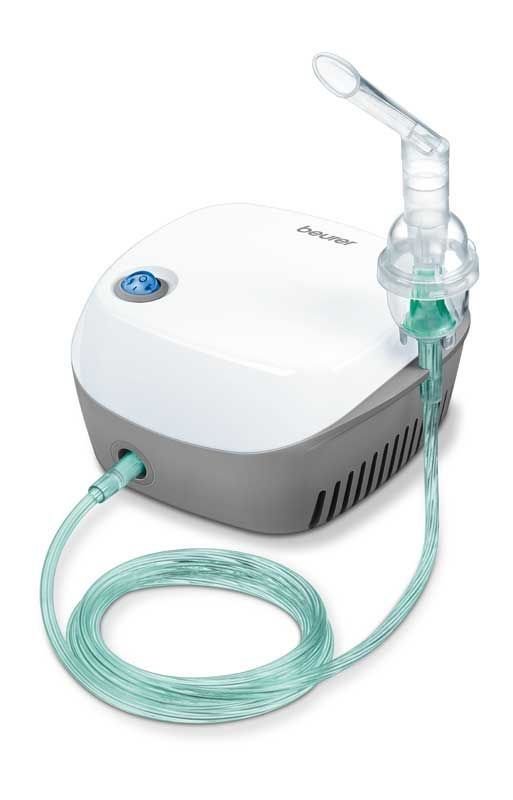
1. CPAP Machines: Continuous Airway Support for Sleep Apnea
CPAP stands for Continuous Positive Airway Pressure. It is the gold standard for treating upper airway collapse and sleep-disordered breathing.
How It Works
A CPAP unit draws in ambient room air, pressurizes it according to a doctor’s prescription, and delivers a single continuous pressure level through a hose and mask. This continuous cushion of air prevents soft tissue in the throat from collapsing during sleep.
Primary Indications
- Obstructive Sleep Apnea (OSA): Loud chronic snoring, gasping for air at night, daytime fatigue.
- Mild Upper Airway Resistance Syndrome (UARS).
Key Features to Look For
- Auto-CPAP (APAP) Mode: Automatically adjusts pressure breath-by-breath based on detected airway blockages (e.g., ResMed AirSense 10/11).
- Integrated Heated Humidifier: Prevents nasal dryness, airway congestion, and throat irritation.
2. BiPAP Machines: Dual-Pressure Support for Lung & Respiratory Diseases
BiPAP stands for Bilevel Positive Airway Pressure. Unlike CPAP, BiPAP delivers two distinct pressure settings, making it much easier for patients with weak respiratory muscles to exhale.
How It Works
- IPAP (Inspiratory Positive Airway Pressure): A higher pressure level delivered when the patient inhales, assisting weakened diaphragm muscles to pull air into the lungs.
- EPAP (Expiratory Positive Airway Pressure): A lower pressure level when exhaling, allowing the patient to blow out carbon dioxide ($CO_2$) without fighting high resistance.
Primary Indications
- Chronic Obstructive Pulmonary Disease (COPD): Helps flush out trapped carbon dioxide ($CO_2$ retention).
- Neuromuscular Diseases (ALS, SMA, Muscular Dystrophy): Supports weak respiratory muscles.
- Overlap Syndrome & Central Sleep Apnea (CSA).
- Post-ICU Ventilator Step-Down Care.
3. Oxygen Concentrators: Supplemental $O_2$ Generation for Hypoxemia
While CPAP and BiPAP devices manage airway pressure, an Oxygen Concentrator manages air quality and oxygen concentration.
How It Works
Ambient air consists of roughly $78\%$ nitrogen and $21\%$ oxygen. An oxygen concentrator pulls in surrounding air, filters out nitrogen using molecular sieve beds, and delivers up to $93\% – 95\%$ pure medical oxygen through a nasal cannula or mask.
Primary Indications
- Interstitial Lung Disease (ILD) & Pulmonary Fibrosis.
- Severe Pneumonia & Post-COVID Lung Damage.
- Chronic Hypoxemic Respiratory Failure ($SpO_2 < 88\%$).
Side-by-Side Comparison: Which Device Does Your Patient Need?
| Feature / Metric | CPAP Machine | BiPAP Machine | Oxygen Concentrator |
| Primary Function | Keeps upper airway open | Assists breathing & flushes $CO_2$ | Supplies high-purity $O_2$ gas |
| Pressure Delivery | Single fixed or auto pressure | Dual pressure (Inhale / Exhale) | Low velocity airflow |
| Oxygen Output | Room air ($21\% \text{ } O_2$) | Room air (Can hook up $O_2$) | Concentrated medical $O_2$ ($93\%+$) |
| Ideal Medical Case | Obstructive Sleep Apnea | COPD, ALS, Lung Failure | Low blood oxygen ($SpO_2$) |
| Prescription Needed? | Yes | Yes | Yes |
Step-by-Step Procedure: Integrating a Home Breathing Device
To ensure patient safety and machine longevity, follow this structured setup procedure:
1.Pulmonologist Assessment & Prescription:
Obtain a formal prescription specifying required parameters: fixed pressure ($cmH_2O$) for CPAP, IPAP/EPAP settings for BiPAP, or flow rate ($L/min$) for Oxygen Concentrators.
2.Professional Device Calibration & Sanitization:
Respiratory Sleep & Solutions technicians run complete pressure diagnostics, verify oxygen purity percentages ($>90\%$), and sterilize all humidifiers and filters.
3.Ergonomic Mask & Accessory Fitting:
Selecting the correct mask size (Nasal Cushion, Full Face, or Nasal Pillows) prevents air leaks and eliminates pressure sores across the nasal bridge.
4.Home Delivery & Power Setup:
Our respiratory specialist installs the unit at your home in Lahore, Faisalabad, or Multan, connecting voltage stabilizers/UPS systems to protect electronic sensors against power fluctuations.
Pro-Tip for Combination Therapy: Many chronic COPD and ILD patients require both a BiPAP machine (for pressure support) and an Oxygen Concentrator (connected via a specialized bleed-in adapter) to maintain healthy gas exchange simultaneously.
Why Choose Respiratory Sleep & Solutions?
Navigating home pulmonary equipment can feel overwhelming for families. Respiratory Sleep & Solutions provides complete end-to-end support across Punjab:
- Authentic Global Brands: Official distributor and supplier of ResMed, Philips Respironics, BMC, and Yuwell devices.
- Doorstep Delivery & On-Site Setup: Fast emergency dispatch in Lahore, Faisalabad, and Multan.
- Certified Clinical Training: Our trained therapists instruct family members on daily hygiene, mask adjustments, and filter replacements.
- 24/7 Troubleshooting Helpline: Technical backup for pressure adjustments, alarm codes, and emergency spare parts.
Frequently Asked Questions (FAQs)
Can a CPAP machine be converted into a BiPAP machine?
No. CPAP units lack the internal dual-valve motor mechanics required to deliver secondary exhalation pressure (EPAP). Patients requiring $CO_2$ clearance must upgrade to a dedicated BiPAP device.
Can an Oxygen Concentrator run 24 hours continuously?
Hospital-grade 5-liter and 10-liter concentrators from reputable brands are built for continuous operation. However, placing the unit in a well-ventilated room away from walls prevents motor overheating.