
Entering the world of sleep medicine and home respiratory care can bring up a lot of technical questions. If your physician or pulmonologist has recently recommended a Bilevel Positive Airway Pressure (BiPAP) system, you might be wondering how it works, how it differs from a standard CPAP, and which manufacturers offer the most reliable performance.
In 2026, home respiratory care has advanced significantly, offering incredibly quiet motors, automated leaks adjustments, and smart cloud tracking. At Respiratory Store & Sleep Solution, we want to make your medical equipment selection completely stress-free. This definitive best BiPAP machines guide covers core medical uses, compares top global brands, and breaks down the technical differences between CPAP and BiPAP systems.
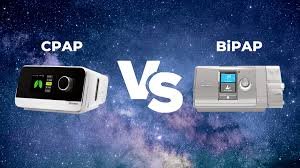
The Core Difference: CPAP vs. BiPAP
While both systems fall under the category of non-invasive ventilation (NIV), they manage airway pressure in fundamentally different ways.
- CPAP (Continuous Positive Airway Pressure): Delivers a single, continuous stream of pressurized air that stays exactly the same during both inhalation and exhalation. It acts as a continuous air splint to keep physical throat blockages open.
- BiPAP (Bilevel Positive Airway Pressure): Uses a synchronized respiratory cycle management engine to deliver two distinct pressures. It provides a higher pressure when you inhale ($IPAP$) to assist airflow into the lungs, and drops to a lower pressure when you exhale ($EPAP$) so you can breathe out naturally without fighting the machine.
Key Clinical Uses: Who Needs a BiPAP?
A standard CPAP is excellent for basic Obstructive Sleep Apnea (OSA). However, your specialist will prescribe a BiPAP machine for more complex conditions where the patient needs active breathing assistance or help clearing out gas:
- High Pressure Intolerance: Patients who require high clinical pressures (above $15\ cmH_2O$) often find it exhausting to exhale against a single CPAP stream. BiPAP provides immediate physical comfort.
- COPD Management: Chronic Obstructive Pulmonary Disease causes air-trapping in the lungs. BiPAP’s lower exhalation pressure allows patients to fully empty their lungs and clear out carbon dioxide.
- Hypoventilation Syndromes: Conditions like Obesity Hypoventilation Syndrome (OHS) or neuromuscular diseases (like ALS) weaken the chest muscles. BiPAP provides the necessary support to ensure deep, healthy breaths.
- Central Sleep Apnea (CSA): When the brain temporarily fails to signal the muscles to take a breath, advanced BiPAP ST models step in automatically to deliver a timed breath.
2026 Top BiPAP Machine Brands Compared
When choosing a device, three global medical manufacturing brands dominate the market in terms of efficacy, comfort, and reliability.
| Brand & Model Line | Notable Technology Feature | Ideal For | Data Tracking Option |
| ResMed AirCurve 10 VAuto / ST | TiControl sync & ultra-quiet acoustic noise reduction | Premium comfort, sensitive sync adjustments, and silent bedrooms | Integrated AirView Cloud App |
| Philips DreamStation BiPAP | SmartRamp and low-profile nightstand design | Modern aesthetic preferences and simple user menus | Bluetooth DreamMapper App |
| BMC G3 B30VT / Y30T Series | Built-in pre-heating humidifier & eco-smart water chamber | Budget-friendly buyers wanting heavy-duty, long-term durability | Quick QR Code Scan Data |
Detailed Brand Insights
1. ResMed (The Premium Gold Standard)
If you are looking at the top tier of ResMed BiPAP models Pakistan registries, the AirCurve series is unmatched. Its premium pressure adjustment algorithms mirror your natural breathing patterns perfectly. It features intelligent climate control that monitors room humidity to prevent moisture buildup in your tube, making it incredibly comfortable to use through the night.
2. BMC Medical (The Budget & Durability Champion)
The BMC bipap vs cpap difference represents a smart balance between cost and performance. Models like the BMC G3 offer advanced ST functionality with reliable pressure stability at a much more accessible price point. It features an integrated heated humidifier, automated altitude adjustments, and high-durability internal components designed to handle local power fluctuations well.
Buying vs. Renting Your Equipment in 2026
Because purchasing a premium bilevel machine involves a significant upfront investment, evaluating your therapy duration is key.
If your condition requires short-term recovery (such as post-hospitalization care or clearing temporary lung congestion), choosing a high-quality BiPAP rent in Pakistan plan is often the most practical financial option. Our rental inventory provides access to top-tier, sterilized machines on flexible weekly or monthly plans, complete with 24/7 technical support and filter replacements.
Comprehensive Network Support Across Pakistan
We manage dedicated local teams and delivery networks to ensure your medical equipment arrives safely and is calibrated correctly:
- Rent Sleep apnea equipment Lahore: Visit our main showroom hub for customized mask fittings, live pressure testing, and direct compliance data downloads. View our location details on our Lahore showroom location page.
- Karachi Distribution Network: Get immediate doorstep delivery, full technical calibration, and on-site support across Sindh by checking our Karachi service directory.
- Twin Cities Deployments: Families in Islamabad and Rawalpindi can access quick equipment setups and specialist support via our Islamabad booking hub.
Conclusion: Trust Your Medical Guidance
The right choice between models and configurations depends entirely on your doctor’s clinical prescription. Whether you require a standard auto-bilevel unit for comfort or an advanced ST model for respiratory support, always source your device from a certified provider to ensure accurate performance.
Ready to check out our complete inventory of retail and rental options? Explore our specialized systems on our BiPAP and respiratory support matrix, or send your prescription details to our clinical care team through our contact and consultation portal to book your home trial session today.
Frequently Asked Questions (FAQs)
Q1: Can a patient shift from a CPAP to a BiPAP without a doctor’s permission?
No, you should never switch without a medical consultation. Changing to a BiPAP requires configuring two separate pressure levels ($IPAP$ and $EPAP$), which must be precisely calculated based on a clinical sleep study or a pulmonologist’s assessment to avoid over-ventilating the lungs.
Q2: Why is a full-face mask usually recommended for BiPAP therapy?
Because BiPAP machines deliver higher pressures to assist with inhalation, any air leaking from an open mouth can disrupt the therapy. A high-quality BiPAP full face mask safely seals both the nose and mouth, ensuring the lungs receive the full prescribed pressure. View our available designs on our CPAP and BiPAP mask catalog.
Q3: What does the ‘ST’ mean in a BiPAP ST machine?
‘ST’ stands for Spontaneous/Timed. In standard Spontaneous (S) mode, the machine changes pressure based only on when the patient inhales and exhales. In Timed (T) mode, if the machine detects that the patient has stopped breathing for a specific number of seconds, it automatically delivers a timed breath to maintain safe blood oxygen levels.
Q4: How long do the internal air filters last on a BMC or ResMed BiPAP?
For optimal lung health and motor longevity, the white ultra-fine dust filters should be checked every two weeks and replaced every 1 to 2 months, especially in dusty environments. Running a machine with a clogged filter can strain the motor and reduce pressure accuracy. Read more about device maintenance on our quality assurance page.