
When you or a loved one starts snoring loudly, gasping for air, or waking up completely exhausted, Google searches quickly lead you down a rabbit hole of medical jargon. Two terms pop up constantly: Sleep Apnea and Obstructive Sleep Apnea (OSA).
Are they two completely different medical issues? Is one more dangerous than the other?
To put it simply: They are not entirely different, but they are not exactly the same either. Understanding the exact difference between sleep apnea and osa is the first step toward getting the right diagnostic treatment and reclaiming your nighttime health. At Respiratory Store & Sleep Solution, we break down this medical hierarchy so you can navigate your diagnosis with confidence.
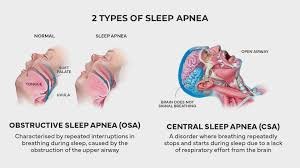
The Medical Hierarchy: Umbrella vs. Type
To understand how these terms relate, it helps to look at them as a medical family tree.
If you are diagnosed with OSA, you have sleep apnea. But if someone says they have sleep apnea, they could technically be suffering from a different form altogether.
The Core Types of Sleep Apnea Disordered Breathing
There are two primary reasons why a human being stops breathing during sleep. It either comes down to a structural “plumbing” problem or a neurological “wiring” problem.
1. Obstructive Sleep Apnea (OSA) — The Physical Blockage
This is the variant that the vast majority of patients suffer from (accounting for over 90% of all cases).
When you fall into deep sleep, the muscles in the back of your throat, your tongue, and your soft palate naturally relax. In patients with OSA, these tissues relax so deeply that they physically collapse into the airway, sealing it shut. Your lungs are actively trying to pull in air, and your chest is moving, but nothing can pass the obstruction. This leads to loud snoring and gasping as your brain forces you awake for a split second to clear the throat.
2. Central Sleep Apnea (CSA) — The Missing Signal
Central sleep apnea has absolutely nothing to do with a blocked throat. Your airway remains perfectly open.
Instead, this is a neurological breathing signal disruption. The breathing center in your brain stem fails to send the necessary electrical signals to your diaphragm and chest muscles telling them to take a breath. For 10 to 20 seconds, your body makes zero effort to breathe—it simply pauses silently. CSA is far less common and is typically linked to underlying medical conditions like congestive heart failure, stroke, or the use of strong pain medications.
Head-to-Head Comparison: OSA vs. CSA
| Clinical Parameter | Obstructive Sleep Apnea (OSA) | Central Sleep Apnea (CSA) |
| Root Cause | Mechanical, physical upper airway collapse | Neurological failure in brain-to-muscle signaling |
| Physical Airway Status | Blocked or tightly pinched shut | Completely open and clear |
| Breathing Effort | High (Chest and stomach move vigorously to fight the block) | Zero (The body makes no physical attempt to breathe) |
| Primary Sound | Loud, chronic snoring, choking sounds, and sharp gasps | Silent pauses in breathing followed by sudden gasps |
| Common Risk Factors | Obesity, large tonsils, neck circumference greater than 17 inches | Heart failure, past stroke, high altitude environments |
Spotting the Common Symptoms
Because both disorders cause severe nighttime oxygen level drops and trigger chronic sleep fragmentation, their daytime consequences look nearly identical:
- Extreme daytime drowsiness and brain fog
- Waking up with a bone-dry mouth or a severe morning headache
- Mood swings, irritability, and sudden short-term memory lapses
However, the nighttime warning signs are distinct. Partners of OSA patients will complain about house-shaking snoring, while partners of CSA patients usually report terrifying, completely silent stretches of time where the person’s chest just stops moving entirely.
How to Get an Accurate Diagnosis in Pakistan
You cannot determine which type of sleep apnea you have simply by tracking your symptoms at home. A definitive diagnosis requires a clinical test called a Polysomnography (Sleep Study).
During this overnight evaluation, sensitive sensors measure your brain waves, chest movement, airflow velocity, and blood oxygen depletion. This data allows pulmonologists to pinpoint exactly why your breathing stops and how many times it happens per hour.
- Home Sleep Apnea Testing Karachi: For convenience, we offer advanced portable diagnostic gear for home trials across Sindh. Learn more on our Karachi diagnostic service page.
- Polysomnography Test Cost Lahore: If you prefer an in-lab or supervised home setup within Punjab, you can book a tech consultation via our Lahore main clinic guide.
- Sleep Clinic Islamabad: Residents of the capital can access direct equipment delivery and specialist matching through our Islamabad booking hub.
Tailoring the Right Treatment Option
The difference between sleep apnea and osa dictates your entire treatment pathway. Using the wrong machine can make the condition worse.
- Treating OSA: Because the problem is a physical wall of tissue, CPAP therapy for airway blockage is the global gold standard. The machine delivers a continuous stream of pressurized air that acts as a gentle splint, keeping the tissue pushed back all night. Explore our available inventory on our specialized CPAP category catalog.
- Treating CSA: Since the issue is a missing brain signal, standard CPAP sometimes isn’t enough because it won’t force a breath. Patients with CSA often require specialized dual-pressure devices (BiPAP ST) or Adaptive Servo-Ventilation (ASV) systems that actively step in and pump air when the body detects a long pause. View these advanced options on our BiPAP and respiratory support matrix.
Conclusion: Don’t Guess, Test
“Sleep Apnea” is the disease family, but “OSA” is the specific diagnosis you are most likely to face. Whether your condition is caused by a physical throat blockage or a subtle neurological delay, leaving it untreated strains your heart, raises your blood pressure, and drains your daily energy.
If you are ready to stop guessing and start sleeping restoratively, browse our medical-grade equipment rentals on our comprehensive rental pricing directory or message our clinical team directly via our contact and consultation portal to set up a home guidance session today.
Frequently Asked Questions (FAQs)
Q1: Is it possible to have both Obstructive and Central sleep apnea at the same time?
Yes. This condition is known medically as Complex Sleep Apnea Syndrome (or treatment-emergent central sleep apnea). It often happens when a patient with severe OSA starts CPAP therapy, and the sudden elimination of the physical blockage triggers the brain to temporarily pause its breathing signals.
Q2: Does losing weight completely cure OSA?
For many individuals, yes. Because excess fatty tissue around the neck directly causes physical upper airway collapse, losing weight can significantly reduce or completely eliminate the mechanical obstruction. However, if your OSA is caused by a naturally narrow jaw structure or large tonsils, weight loss alone may not fully resolve it.
Q3: Why does central sleep apnea cause less snoring than OSA?
Snoring is the sound of air violently forcing its way through a partially collapsed, vibrating throat structure. In Central Sleep Apnea, because the airway remains completely wide open and the body simply stops making any physical effort to pull air in, there is no tissue vibration, making the pauses silent.
Q4: Can a home sleep test reliably distinguish between OSA and CSA?
Advanced Type II and Type III home sleep study devices include specialized chest and abdominal belts. By tracking whether your chest is moving during a breathing pause, the machine can tell if your body is trying to fight a physical block (OSA) or if the breathing effort has completely stopped (CSA).