
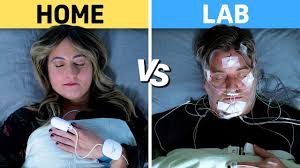
If you struggle with loud snoring, morning choking fits, or chronic daytime exhaustion, your doctor has likely recommended an obstructive sleep apnea evaluation. However, many patients hesitate when faced with the choice of how to get tested. Should you spend a night wired up in a clinical environment, or can you gather accurate respiratory metrics from the comfort of your own bed?
Choosing between home sleep apnea testing vs polysomnography is a critical decision that directly impacts your budget, comfort, and the timeline for starting your sleep apnea care at home. At Respiratory Store & Sleep Solution, we believe in empowering patients with total clinical clarity. In this guide, we break down the core differences, data metrics, and capabilities of both testing methods so you can make an informed choice.
Understanding Polysomnography (In-Lab Sleep Study)
An In-Lab Sleep Study, medically termed polysomnography, remains the absolute gold standard in sleep medicine. This evaluation requires you to spend the night in a private room at a certified sleep disorder clinic Lahore or other major health facilities in Pakistan
During this overnight evaluation, a certified sleep technologist connects you to more than twenty advanced physiological sensors. These channels continuously run:
- Brainwave activity tracking (EEG) to map exact sleep stages.
- Eye movements monitoring (EOG) to identify REM sleep cycles.
- Heart rate patterns (ECG) and overnight oxygen saturation monitoring.
- Continuous chest wall movement and leg muscle twitches.
Because of this intensive tracking framework, an in-lab study doesn’t just check for simple airway blockages; it detects complex central sleep disorders, neurological anomalies, restless leg syndrome, and severe parasomnias.
Understanding Home Sleep Apnea Testing (HST)
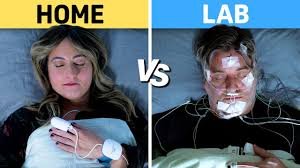
For patients who prefer maximum convenience, a home sleep test offers a highly streamlined, non-invasive alternative. Instead of moving into a clinical facility for a night, you pick up a compact portable sleep monitor for home use from our specialized team.
As illustrated above, a home kit like the premium ResMed ApneaLink Air uses just three or four lightweight components rather than a massive web of complex wires:
- Nasal Cannula: A small tube resting beneath your nose to track airflow and breathing interruptions.
- Effort Belt: A flexible strap placed around your chest to monitor respiratory muscle expansion.
- Pulse Oximeter: A secure clip attached to your finger for continuous blood oxygen tracking.
You simply turn the device on before sleeping, and it automatically writes your respiratory metrics to a secure micro-chip while you rest in your regular environment.
Side-by-Side Comparison: In-Lab vs. Home Test
| Feature Profile | In-Lab Polysomnography (PSG) | Home Sleep Test (HST) |
|---|---|---|
| Testing Environment | Clinical laboratory or specialized hospital room | Your own familiar bedroom and mattress |
| Data Metrics Monitored | 20+ comprehensive channels (Brain, heart, lungs, muscles) | 3 to 5 core channels (Airflow, chest effort, oxygen drop) |
| Technician Supervision | Yes, monitored in real-time by an on-site technologist | No, self-administered by the patient using our setup guide |
| Ideal Candidate Profile | Complex medical cases, suspected OHS, or movement disorders | High-risk patients presenting with classic symptoms of OSA |
| Sleep Apnea Diagnostic Test Cost | Higher financial investment due to clinic stay and staff | Highly affordable and budget-friendly |
Evaluating Accuracy and the AHI Threshold
The fundamental goal of both testing systems is to run a precise Apnea-Hypopnea Index data calculation to determine the presence and severity of sleep apnea. However, their underlying diagnostic methodology alters how they interpret this data.
An in-lab sleep study Pakistan setup records exactly when you are asleep versus awake by reading your brainwaves. If your breathing stops 30 times during 6 hours of actual sleep, your true AHI is accurately registered as 5.
Conversely, a home device cannot track brain sleep states; it only calculates data based on total recording time. If you lie awake anxiously in bed for two hours while the device is active, the calculation might artificially dilute your score. Therefore, if a home test returns a negative or borderline result despite showing clear clinical symptoms, your pulmonologist will still mandate an in-lab validation study to rule out false negatives.
Transitioning From Diagnosis to Device Recovery
No matter which testing path you and your doctor select, confirming moderate-to-severe sleep apnea means you must quickly integrate reliable therapy into your routine. Once your medical report is finalized, our team ensures a seamless transition during your CPAP machine setup after diagnosis.
Because purchasing equipment outright can involve a high retail price, utilizing Respiratory Store & Sleep Solution rentals allows you to start your recovery instantly with zero heavy upfront investments. We provide certified devices from leading global brands like the Philips Respironics diagnostic kit range, allowing you to test configurations seamlessly. You can explore our available devices directly on our comprehensive BiPAP and CPAP product catalog.
Finding Local Diagnostics and Therapy Hubs
Accessing reliable medical equipment and diagnostic support across Pakistan has never been more convenient through our localized support infrastructure:
- Rent CPAP Machine Islamabad: Twin-cities residents can access premium home diagnostic kits and rapid home equipment delivery through our dedicated Islamabad service branch page.
- BiPAP and CPAP Rental Karachi: Coastal patients can access 24/7 technical troubleshooting and setup calibration by visiting our localized Karachi delivery and terms directory.
- Medical Equipment Rental Lahore: Lahore residents can visit our central showroom for face-to-face consultations, mask fittings, and device compliance tracking. View our coordinates via the Lahore main showroom location page.
Conclusion: Take the First Step to Better Sleep
If you present with severe cardiopulmonary complications, suspect complex overlapping conditions, or require advanced respiratory support, an in-lab study is your safest option. However, if your goal is a quick, comfortable, and affordable screening for standard obstructive blockages, home sleep testing offers an incredible, stress-free path forward.
Do not let disrupted breathing compromise your long-term cardiovascular health. Reach out to the diagnostic coordination specialists at Respiratory Store & Sleep Solution through our centralized contact and consultation page to book your diagnostic device or select a flexible rental package today.
Frequently Asked Questions (FAQs)
Q1: Can a home sleep test tell me if I have insomnia or leg cramps?
No. A home sleep test is purely designed to monitor breathing and respiratory effort. It cannot diagnose neurological sleep conditions, parasomnias, restless leg syndrome, or chronic insomnia because it does not track brainwave patterns.
Q2: What happens if the home test sensors come off during the night?
Modern home testing kits feature smart indicator lights that turn green if the sensors stayed securely connected throughout the night. If a sensor drops off and data is insufficient, our team validates the data chip upon return and coordinates a re-test. You can read about our strict data protocols on our quality assurance page.
Q3: Is the home sleep testing kit sanitized before I bring it into my house?
Absolutely. At Respiratory Store & Sleep Solution, safety is paramount. Every returned diagnostic module, pulse clip, and chest belt undergoes medical-grade sterilization, and patients are always issued brand-new, sealed nasal cannulas to maintain strict hygiene.
Q4: How long does it take to get the results from a home sleep test?
Once you return the kit to our showroom, the data is extracted from the micro-chip and analyzed by a certified sleep specialist. Your completed diagnostic report with your final AHI score is typically ready within 24 to 48 hours.
Q5: How can I view pricing for rental equipment after my diagnosis?
We offer flexible weekly, monthly, and long-term diagnostic rental structures designed to match any budget profile. You can view a transparent breakdown of all options by checking our centralized rental pricing and packages directory.