
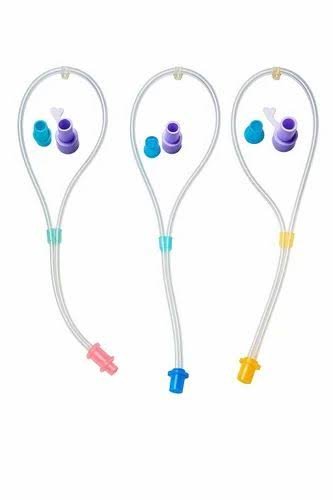
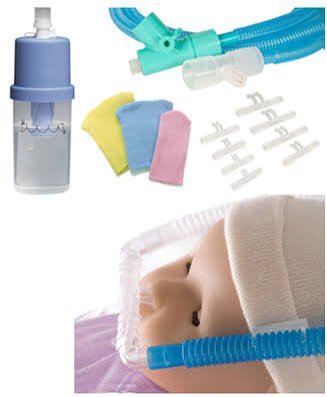
Selecting the appropriate patient interface is critical to safe neonatal respiratory management. The bubble cpap nasal cannula acts as the direct pathway delivering warm, humidified airway pressure to newborn patients suffering from Respiratory Distress Syndrome (RDS). Designed for maximum comfort, it reduces structural facial friction while maintaining precise airway pressures.
Core Technical Features & Clinical Principles:
-
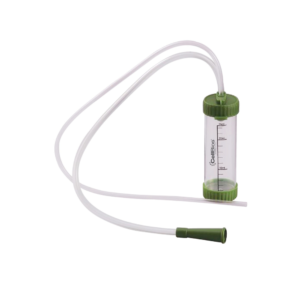
What is bubble CPAP & its Mechanism? The clinical bubble cpap mechanism relies on a continuous blended gas flow routed through an underwater seal column. This system generates small, constant pressure oscillations that transfer down the bubble cpap circuit directly into the infant’s lungs, stimulating natural surfactant production and dropping the work of breathing.
-
Bubble CPAP vs CPAP: Unlike standard motorized adult CPAP systems that rely on mechanical control valves, infant bubble systems protect fragile lung tissues via underwater column submersion depths, naturally regulating bubble cpap peep levels to eliminate barotrauma risks.
-
Clinical Adaptability: The anatomical structure features short, curved bubble cpap nasal prongs made of premium biocompatible silicone. This guarantees an airtight seal within strict bubble cpap nicu settings, keeping therapy delivery intact even if the infant moves.
Clinical Baseline: Bubble CPAP Protocols & Parameters
| Clinical Parameter | Operational Baseline Specification | Purpose / Clinical Function |
| Bubble CPAP Age Limit | Premature Newborns up to Toddlers (~2 Years) | Constrained by patient weight limitations and facial anatomy sizes. |
| Operational Gas Flow | 4 to 10 L/min | Satisfies infant inspiratory drive and keeps the circuit bubbling. |
| Target PEEP Pressures | $4\text{ to }8\text{ cmH}_2\text{O}$ | Set by submersing the circuit pipe deep into the water column. |
| Optimal Temperature | 35°C to 37°C (Active Humidification) | Protects thin neonatal nasal passages from drying or cracking. |
Bubble CPAP Interface & Consumables Pricing in Pakistan (2026)
We supply direct medical-grade accessories and specialized consumables to healthcare setups and home intensive care operations nationwide:
| Product Model / Consumable Component | Estimated Price (PKR) | Same-Day Delivery Processing Areas |
| Infant Bubble CPAP Nasal Cannula (Fit Pack) | Rs. 4,500 – Rs. 6,500 | Lahore, Rawalpindi, Islamabad |
| Heated-Wire Disposable Bubble CPAP Circuit | Rs. 5,000 – Rs. 8,000 | Karachi, Multan, Lahore, Peshawar |
| Neonatal Silicone Headgear & Bonnet Wrap | Rs. 3,500 – Rs. 5,500 | Nationwide Shipping (Pakistan) |
| Complete Bubble CPAP Machine Unit | Rs. 240,000 – Rs. 480,000 | Institutional Procurement (Nationwide) |
Frequently Asked Questions (FAQs)
1. What dictates the bubble CPAP age limit for pediatric patients?
The bubble cpap age limit is generally capped around infancy to early childhood (typically up to 10-12 kg or roughly 2 years of age). Beyond this weight class, a child’s natural inspiratory flow demands exceed what the underwater bubbling system can safely supply, requiring a transition to high-flow nasal cannulas or standard ventilators.
2. How do you size a neonatal bubble CPAP nasal cannula correctly?
Proper sizing requires measuring the space between the infant’s nostrils (the nasal septum width). The silicone bubble cpap nasal prongs should fit snugly into the nostrils without stretching the skin or pressing against the central septum wall, leaving a tiny gap to prevent pressure sores.
3. Can I reuse a disposable infant bubble CPAP circuit across multiple patients?
No. To strictly maintain clean hospital bubble cpap nicu settings and prevent cross-contamination, circuits and nasal cannula pieces are strictly single-patient-use items. They must be inspected daily and replaced immediately per your clinical coordinator’s protocol.
Reviews
There are no reviews yet.