
Setting up a critical care unit—whether inside a premium healthcare facility or transforming a bedroom for high-dependency home care—revolves around one vital piece of technology: the medical ventilator. When a patient suffers from severe respiratory failure, choosing the right system is a critical clinical decision.
In 2026, managing intensive care unit infrastructure budgeting has become highly dynamic due to shifting currency values and medical import tariffs. Families and procurement officers frequently find themselves asking: Should we invest in buying a brand-new unit, or does a monthly rental plan make more financial sense?
At Respiratory Store & Sleep Solution, we break down the latest ventilator machine price in Pakistan, compare the costs of buying versus renting, and analyze the technical metrics you need to consider.
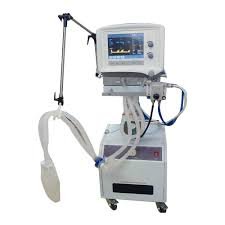
Technical Classifications: Invasive vs. Non-Invasive Systems
Before looking at the budget, it is important to match the machine’s clinical classification with the patient’s medical prescription. Ventilators are generally split into three distinct categories
1. Non-Invasive Ventilators (NIV)
These systems deliver targeted air pressure using a tightly sealed full-face or nasal mask. They do not require surgical airway intervention and are primarily used for chronic respiratory conditions like COPD, sleep apnea, or early-stage respiratory distress.
2. Invasive & Critical Care ICU Ventilators
These are full-scale life-support systems. They deliver precise continuous oxygenation tidal volume configuration directly into the lungs through an endotracheal tube inserted into the windpipe or a surgical tracheostomy opening. These machines manage the patient’s entire breathing cycle mechanically.
Ventilator Machine Price in Pakistan (Estimated 2026 Market Rates)
The total cost depends heavily on whether the machine is portable, refurbished, or a full-scale ICU workstation. The table below outlines current estimated market price ranges and monthly rental structures across Pakistan:
| Equipment Category & Model Type | Estimated Purchase Price (PKR) | Average Monthly Rental Fee (PKR) | Ideal Use Case Environment |
| Premium BiPAP / Intermediate NIV (e.g., ResMed Lumis, Philips DreamStation) | Rs. 180,000 – Rs. 350,000 | Rs. 15,000 – Rs. 25,000 | Chronic home care, sleep clinics, stable neuromuscular patients. |
| Portable / Transport Ventilator (e.g., ResMed Stellar 150, Trilogy 100) | Rs. 650,000 – Rs. 1,200,000 | Rs. 45,000 – Rs. 75,000 | Patient transit, ambulance deployment, advanced home ventilation. |
| Refurbished Critical Care ICU Unit (e.g., Dräger Evita XL, Maquet Servo-i) | Rs. 1,400,000 – Rs. 2,200,000 | Rs. 90,000 – Rs. 140,000 | Step-down hospital wards, private home ICU setups with nursing. |
| New Heavy-Duty ICU Workstation (e.g., Aeonmed VG70, Mindray, Medtronic) | Rs. 2,800,000 – Rs. 4,500,000+ | Rarely Rented (Institutional Lease Only) | Intensive Care Units, operating theaters, premium medical centers. |
Buy vs. Rent: Which Makes Sense for Your Budget?
When to Choose a Monthly Rental Plan
Renting is often the most practical choice for home care. If a patient is transitioning out of an ICU and requires temporary breathing assistance for a few weeks or months during recovery, renting avoids a massive upfront capital expense.
- The Rental Advantage: Critical care machines require regular calibration, specialized oxygen sensors, and bacterial filter replacements. When you opt for an ICU ventilator rental price Lahore or Karachi package, the rental agency handles all technical servicing, emergency replacements, and routine maintenance at no extra cost.
When to Buy the Machine Outright
Purchasing a unit outright is typically the preferred route for hospitals, private clinics, and long-term diagnostic centers expanding their permanent beds.
- The Purchase Advantage: For medical institutions, buying ensures long-term asset availability, allows for customizable software configurations, and eliminates ongoing rental bills. If you choose to buy medical ventilator online Karachi or through certified distributors, look for packages that include at least a 1-to-2-year official depot warranty with local engineering support.
Key Technical Specifications to Verify
Whether you are leasing or buying, ensure your biomedical engineer confirms these three safety features:
- Pneumatic Power & Internal Turbine Mechanics: Check whether the device requires an external wall-compressor line for medical air, or if it features an internal high-speed turbine. Turbine-driven models (like the Aeonmed VG70 ventilator rental series) are much easier to set up at home because they generate their own airflow without needing massive external air compressors.
- Emergency Backup Battery Systems: Power outages and load-shedding are major considerations in Pakistan. Any critical care device must feature an integrated internal battery capable of running for at least 2 to 4 hours, and should be backed up by an external pure sine-wave UPS system.
- Advanced PEEP Adjustment: Ensure the software allows for precise adjustments to positive end expiratory pressure mechanics. This pressure keeps the lung’s air sacs open at the end of a breath, preventing alveolar collapse in severe respiratory cases.
Specialized Combo Setups for Complex Care
In many advanced home care situations, a ventilator does not operate entirely on its own. For comprehensive patient care, it is often paired with complementary equipment:
- High-Flow Oxygen Integration: Most transport and ICU ventilators require a concentrated oxygen feed to enrich the air mixture. This can be managed by linking the system to a high-capacity oxygen concentrator machine to ensure a steady supply of high-purity gas.
- BiPAP and Pressure Support: For patients who do not require invasive intubation but still need strong pressure support to clear carbon dioxide, setting up a high-end BiPAP rent in Pakistan circuit provides a comfortable, non-invasive alternative to full life-support ventilation.
Nationwide Delivery & Biomedical Setup Support
We maintain a dedicated fleet of biomedical technicians to ensure your critical care setup is delivered, sterilized, and calibrated safely:
- Medical Equipment Suppliers Lahore: Visit our central facility for live circuit demonstrations, pressure calibration checks, and technical training. View our coordinates on our Lahore showroom location page.
- Home Care Ventilator Setup Islamabad: Get immediate delivery, backup power configuration, and technical assistance across the twin cities through our Islamabad service branch page.
- Critical Care Delivery Karachi: Access rapid deployment of respiratory equipment and transport systems across all sectors via our dedicated Karachi logistics network guide.
Final Recommendation: Making the Decision
For hospitals and long-term clinics, buying a brand-new machine with an official warranty is a sound investment in your facility’s infrastructure. For families managing home care, a structured monthly rental plan provides premium, medical-grade technology with full engineering support while keeping your budget manageable.
Want to consult with our biomedical team or check our current retail and rental availability? Explore our active inventory on our respiratory equipment matrix, or share your patient’s clinical prescription with our care specialists via our contact and consultation hub to configure your system today.
Frequently Asked Questions (FAQs)
Q1: What is included in a home ventilator rental package?
A standard rental package generally includes the main ventilator unit, an internal or external backup battery, a power adapter, a reusable or disposable breathing circuit tube, and an expiratory valve assembly. Specialized consumables, like specific tracheostomy interfaces or customized non-invasive masks, are usually purchased separately for hygiene reasons.
Q2: How often do the internal filters of a ventilator need to be replaced?
The primary medical-grade HEPA filters and inlet foam filters should be inspected weekly. For home care setups, the outer dust filters can often be washed and dried, while internal bacterial filters are typically replaced every 30 days—or between patients—to prevent cross-contamination and maintain clean airflow.
Q3: Can a transport ventilator be connected to a standard car power outlet?
Yes, many modern transport models (such as the ResMed Stellar or Trilogy series) are equipped to run on DC power inputs (typically $12\ V$ or $24\ V$) using a specialized vehicle inverter cable. This allows for safe, continuous respiratory support during long-distance patient transfers in a car or private ambulance.
Q4: What is the difference between a BiPAP machine and a full ventilator?
While both provide pressure support, a BiPAP machine is a non-invasive device that assists a breathing patient by alternating between high inhalation pressure and lower exhalation pressure. A full ventilator is a life-support machine that can completely take over the mechanics of breathing for an unconscious or non-breathing patient using both invasive and non-invasive modes, complex volume controls, and advanced alarm systems.